Google Launches Gemini 4 Hydrogen to Power Faster AI Agents and Enterprise Workflows
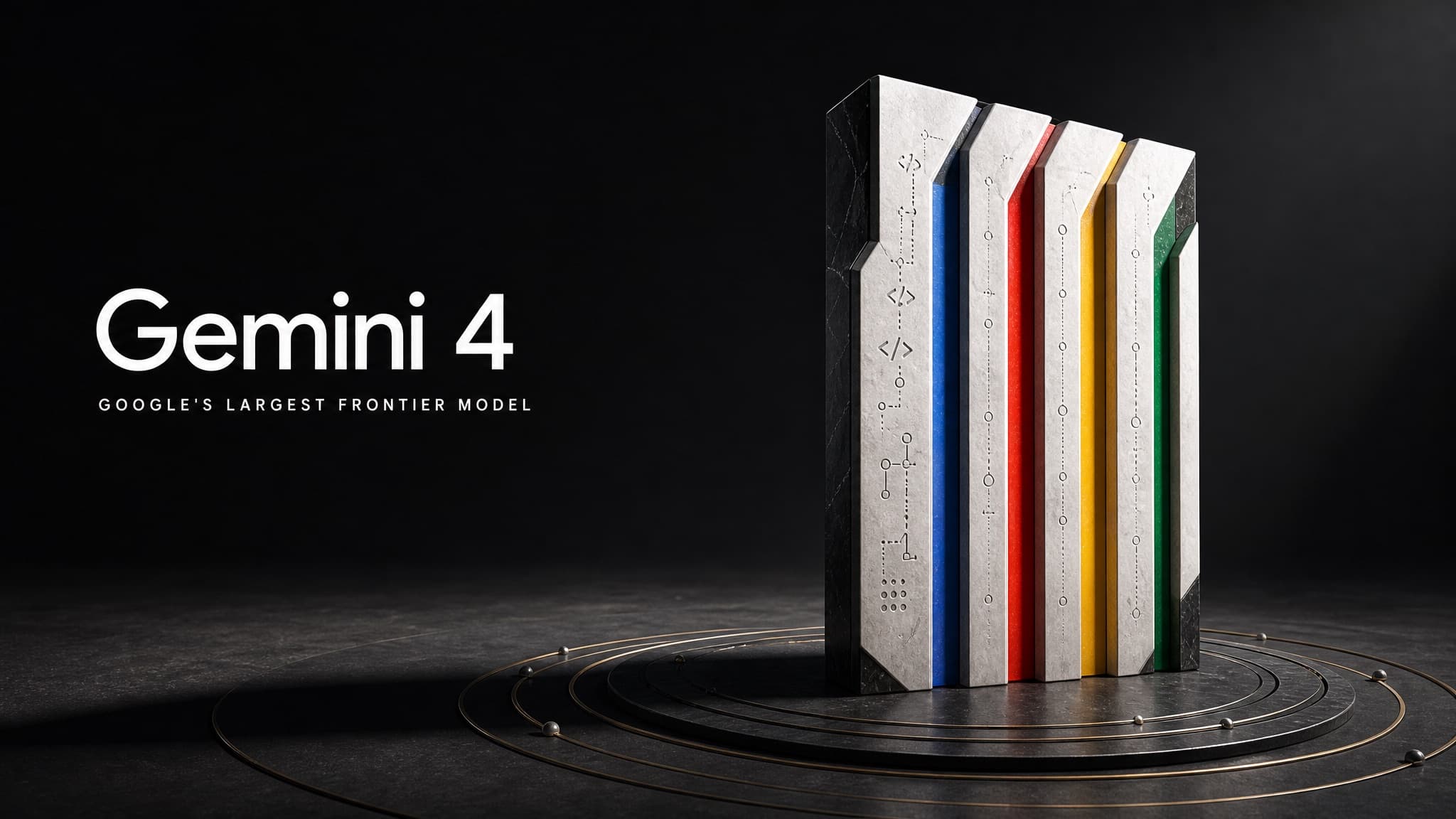
Google has introduced Gemini 4 Hydrogen, a new artificial intelligence model designed to make coding, research, data analysis and automated workflows faster and more efficient. Announced on November 12, 2026, the model expands Google's Gemini 4 family with a focus on rapid execution and practical applications across developer, enterprise and consumer environments.
Developed by Google DeepMind, Gemini 4 Hydrogen is positioned as a model for everyday work and agentic execution. While Google's Gemini 4 Carbon and Gemini 4 Argon models focus on complex reasoning and longer tasks, Hydrogen is designed to handle repetitive execution, tool usage and multi-step workflows with lower latency.
Designed for Faster Agentic Workflows
One of the key features of Gemini 4 Hydrogen is its ability to support AI agents that can perform tasks across multiple steps.
The model can assist with coding, debugging, repository navigation, research, data analysis and web development. It can also work alongside other Gemini models, allowing organisations to divide complex tasks between models based on their capabilities.
Google is introducing an Orchestrator feature in Google Antigravity that can dynamically switch between models such as Gemini 4 Carbon and Hydrogen during a session.
In Google's reported Terminal-Bench 4.0 evaluation, this multi-model approach achieved task success rates close to Carbon while using 24% less quota on average and completing tasks 19% faster.
Improved Performance for Developers and Businesses
Gemini 4 Hydrogen is designed to improve everyday software development and enterprise operations.
According to Google, the model completes tasks 2.5 times faster than Gemini 3.8 Flash at its default high thinking level. It also achieved a Terminal-Bench 4.1 score of 57%, compared with 18.2% for Gemini 3.8 Flash.
The model supports iterative coding, debugging and codebase analysis, helping developers identify issues and make targeted changes without unnecessarily rewriting existing files.
For enterprise applications, Hydrogen can process complex documents, spreadsheets, charts, audio and recorded video. Its multimodal capabilities are intended to help businesses generate structured reports and extract useful information from large collections of data.
Four Thinking Levels Offer Greater Flexibility
Google has introduced four configurable thinking levels for Gemini 4 Hydrogen: low, medium, high and xhigh.
These settings allow developers and users to adjust the model's reasoning depth according to task complexity, response speed and computational cost.
The model also supports a one-million-token context window, enabling it to process substantial amounts of information within supported workflows.
Google lists API pricing at $1.50 per million input tokens and $7.50 per million output tokens, with flat pricing across the context window.
Focus on Security and Reliable AI Execution
As AI agents gain the ability to interact with tools and perform actions, reliability and security become increasingly important.
Google says Gemini 4 Hydrogen includes improvements designed to reduce unauthorised actions, follow instructions more accurately and respond appropriately when tasks are blocked or permissions are unavailable.
The company also reports improvements in resistance to indirect prompt injection attacks and safeguards for tool-use, computer-use and coding workflows.
These capabilities are particularly relevant for businesses deploying AI agents in environments involving sensitive information, internal systems and customer operations.
Availability Across Google's AI Ecosystem
Gemini 4 Hydrogen is rolling out globally across Google's developer, enterprise and consumer platforms.
Developers can access the model through Google AI Studio and the Gemini API, while eligible enterprise customers can use it through Gemini for business and supported Google Cloud services.
Consumers can access it through the Gemini app and Google Search. Eligible Google AI Pro and Ultra subscribers can also use it through Google Antigravity.
What Gemini 4 Hydrogen Means for the Future of AI
The launch reflects a broader shift in artificial intelligence from conversational assistants towards systems capable of completing practical tasks.
Businesses increasingly need AI models that can work with enterprise data, interact with software tools and execute multi-step operations without creating unnecessary delays or costs.
By focusing on speed, configurable reasoning and coordination between specialised models, Google is positioning Gemini 4 Hydrogen as a foundation for more efficient agentic workflows.
As organisations explore AI-powered automation, the ability to combine intelligent reasoning with reliable execution could become an important factor in how businesses develop and deploy their next generation of digital systems.